School Hallway Safety: Practical Routines That Respect Students and Staff
A safe school hallway is not created by a sign-out sheet alone. It comes from clear expectations, predictable adult support, and a school culture in which students understand why the rules exist.
Hall passes are one small part of that system. Done well, they help staff coordinate movement without making routine student needs feel suspicious or burdensome.
Clarify the goal of your hallway procedures
A useful goal might be to reduce interruptions, keep staff informed about where students are expected to be, and make transitions more orderly. Define those goals before selecting forms, passes, or digital systems.
Avoid framing every unscheduled hallway trip as a discipline problem. Students may need the restroom, a scheduled support service, the office, or an accommodation. Your procedure should leave room for those realities.
Build consistent expectations across the building
Students should hear similar instructions from different teachers about requesting a pass, using the correct route, and returning to class. Consistency is helpful, but it should not erase appropriate professional judgment or individual student accommodations.
A short, accessible policy usually works better than a long list of exceptions that no one remembers. Include what happens during passing periods, lessons, assemblies, substitute coverage, and emergencies.
Make student movement visible—not public
Teachers and authorized school staff may need to know who is currently out. Other students generally do not need a public timeline of their classmates’ movements.
If you use a paper sign-out sheet, consider where the record is visible and how it is stored after use. If you use a digital kiosk, review display settings, screen placement, user permissions, and the vendor’s privacy documentation.
Think carefully about waiting queues
A one-at-a-time routine can reduce overlapping nonurgent trips in some classrooms, but a rigid queue may be inappropriate when needs are urgent or when a student has an accommodation. Define the exceptions in advance and make sure staff understand them.
If a digital queue automatically advances when someone returns, teach students exactly what that means and how to cancel a request that is no longer needed. The queue is a classroom management aid, not a substitute for staff judgment.
Prepare for situations where the normal routine does not fit
Plan a clear alternative for students unable to use a kiosk independently, and make sure staff can respond promptly to urgent health or accessibility needs. Provide a simple paper fallback for device or connectivity failures.
Discuss how staff will verify a student’s safe return if a class period ends or a sign-in is forgotten. A missing return record is a reason to check, not proof that a student is still absent or deliberately breaking a rule.
Use records to improve routines, not label students
Trends can be helpful at the classroom or school level: Are departures clustering in a particular period? Are queue rules causing delays? Are sign-out steps too complicated?
Records usually cannot explain a student’s motivation on their own. Review them carefully, limit access to people with an appropriate educational role, and make retention and deletion practices part of your written plan.
Include staff and students in the review
Ask teachers whether the process interrupts lessons, students whether they understand the routine, and school staff whether it supports supervision. Make small adjustments based on what you learn. A brief, well-taught procedure is often more valuable than a complicated one that is inconsistently followed.
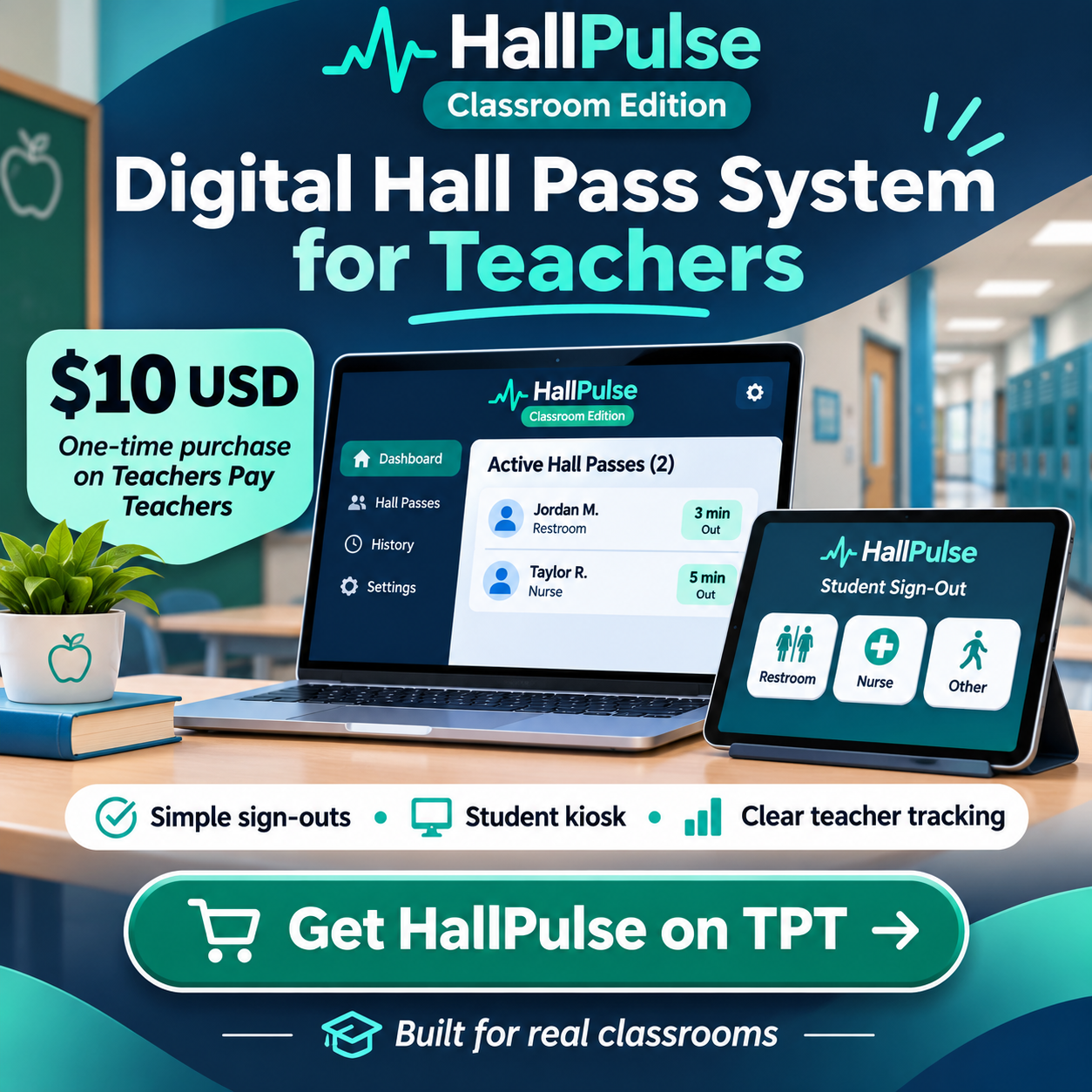
For a classroom-specific digital workflow, explore how HallPulse works and the individual teacher edition. For coordinated school discussions, visit HallPulse for Schools.
Frequently asked questions
What should a school hall pass policy include?
Define who can request a pass, what students do on departure and return, how staff supervise movement, when exceptions apply, and how records are secured and retained.
Can a hall pass system replace hallway supervision?
No. A pass indicates an expected movement or recorded departure, not the student’s real-time location. Supervision and emergency procedures remain essential.