A Practical School Hall Pass Policy: 10 Questions for Administrators
A practical school hall pass policy tells students when they may leave, tells staff how to record a departure, and explains what happens when someone returns. Its purpose is coordination and safety—not making normal restroom or support needs difficult to access. A policy works best when teachers can follow it consistently without pausing every lesson.
Before choosing a clipboard or a digital pass system, a school leadership team should answer the same ten questions. Write the answers in plain language, test them with staff and students, and make sure appropriate health, disability, and emergency exceptions are addressed.
1. What problem are we trying to solve?
Decide whether your priority is knowing who is out, avoiding unnecessary instructional interruptions, supporting safe supervision, or improving inconsistent records. These are related but different objectives. A digital dashboard cannot compensate for unclear expectations or gaps in physical supervision.
2. Which departures require a pass?
Name the destinations covered by the policy, such as restroom, office, water, library, or another approved school location. Define what happens when a student has a scheduled appointment or is following a staff-approved accommodation. Avoid turning a routine intended for ordinary trips into a barrier to essential access.
3. When can students leave?
Describe the normal classroom process, but also empower teachers to respond to urgent situations. Do not make a fixed maximum number of restroom visits the default substitute for professional judgment. Work with administrators and student-support staff on exceptions that must never be delayed by a queue.
4. Who approves and supervises movement?
A pass documents an expected departure; it does not tell staff where a student actually is. Clarify the classroom teacher’s role, the responsibilities of staff assigned to corridors, and the procedure for checking on a student when a return is overdue. Keep emergency protocols separate and clearly documented.
5. What must students do on return?
Choose a simple closure step: put back the physical pass, write the return time, or tap the kiosk again. A policy without a reliable return routine produces incomplete records. Explain how missed sign-ins are reconciled, including at the end of a class period.
6. Will a waiting queue be used?
One-at-a-time access may make ordinary trips more predictable, but not every request should be treated equally. If your school uses a queue, state when students join it, how turns advance, who can override it, and which urgent or accommodated needs bypass it.
7. What information will we record?
Collect only information necessary for the purpose. Student identity or classroom identifier, departure time, return status, and a general destination category may be sufficient in many settings. Avoid collecting medical explanations or publishing student trip histories to classmates. Set appropriate access and retention rules.
8. What happens when technology fails?
A digital system needs a paper or staff-managed fallback. Specify who uses the fallback, how staff keep the current-out list accurate, and whether records will later be entered into the software. Test common issues, including a lost network connection, shared-device availability, and substitute coverage.
9. How will we teach the routine?
Give staff a one-page guide and students a brief demonstration. Model an ordinary departure, an urgent request, a canceled request, and the return action. A policy is not truly implemented until someone unfamiliar with it can complete the steps without extended instructions.
10. How will we know whether the policy helps?
Choose a small number of measures: ease of sign-out, teacher interruptions, incomplete return records, staff feedback, and student experiences. Review patterns without assuming a frequent trip means misconduct. Ask whether students can still access facilities and support promptly.
A short hall pass policy template
Purpose: Maintain an orderly, respectful record of routine student departures and returns. Procedure: Follow the classroom approval process, sign out using the assigned method, travel to the approved destination, and sign in when back. Exceptions: Urgent health needs and documented accommodations are handled promptly by authorized staff. Records: Information is available only to appropriate staff and handled under school privacy and retention rules.
Write this in language appropriate for your grade levels, confirm the details with district policy, and train substitutes. For additional perspective, see the U.S. Department of Education’s school climate guidance, which emphasizes a safe, supportive school environment.
Where HallPulse fits
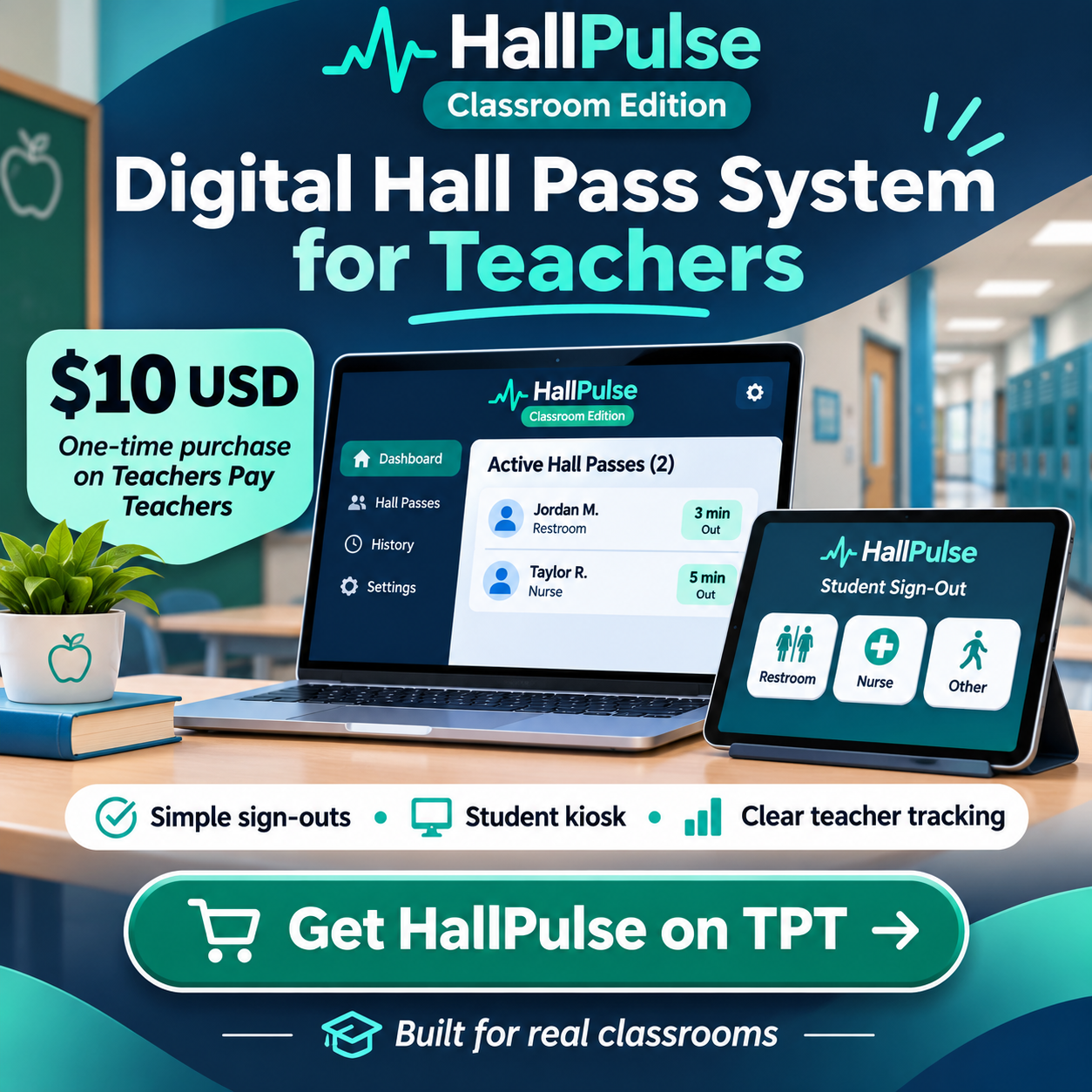
If you are evaluating a classroom-focused digital sign-out workflow, explore HallPulse Classroom and how the student kiosk works. For a coordinated building-wide policy, contact us about school options; organizational features and requirements are discussed separately from the individual teacher edition.
Frequently asked questions
Should every teacher use the same policy?
A common set of expectations helps students, but implementation should allow authorized staff to accommodate individual needs and different learning environments.
Can hall pass records replace hallway supervision?
No. Sign-out information can support coordination but does not verify physical location or replace supervision and emergency procedures.