How to Build a Classroom Hall Pass System That Students Actually Follow
A classroom hall pass system should answer a few simple questions without interrupting the lesson: Who is out? Where did they say they were going? When did they leave? Have they returned? When the routine is clear, teachers can spend less time repeating instructions and students know what to do.
The best system is not necessarily the one with the most rules or the newest technology. It is the one that fits your schedule, respects students, and is easy to use on a busy Tuesday afternoon.
Start with the purpose, not the pass
Before changing your procedure, identify the problem you want to solve. Are students interrupting instruction to ask permission? Is the paper sign-out sheet frequently missing? Is it difficult to see who is still in the hallway? Do several students ask to leave at once?
Different problems call for different solutions. A sign-out routine may improve visibility, but it does not replace appropriate hallway supervision or a conversation with a student who needs support.
Choose four clear steps for students
1. Request or begin a trip
Explain when students may leave independently and when they need to ask. Make exceptions clear for urgent needs or accessibility accommodations. Students should never have to guess whether a routine applies to them.
2. Record the departure
Use a consistent system that captures the minimum information you actually need. On paper, that might be a clipboard by the door. With a digital kiosk, it might be tapping a displayed name and selecting a destination.
3. Follow the hallway expectations
Teach the expectations directly: take a reasonable route, respect other classes, follow relevant school rules, and return when finished. Keep this language neutral and focused on safety rather than punishment.
4. Close the trip on return
A record is only useful if returns are logged. Give students an easy way to sign back in immediately, and establish what staff should do if a return is missed or a class period ends.
Make the physical setup effortless
Place the pass or kiosk where students can use it without walking through the teaching area. Avoid exposing detailed student information to visitors. If the screen is shared, review exactly what appears on it and whether display names or numbers are appropriate.
Write the steps on a short classroom poster. Demonstrate one complete sign-out and sign-in. Then have students practice the routine before expecting it to work smoothly in normal class time.
Decide whether a waiting queue helps
Some teachers prefer one student out at a time for ordinary requests. Others have a larger class, a more flexible policy, or students whose needs require exceptions. A queue can make turn-taking predictable, but it should not prevent urgent access or conflict with school policy.
If you use a queue, tell students what happens when someone returns. For example, an available turn could go to the next student who is waiting. Students should also know how to cancel a request they no longer need.
Plan for imperfect days
A reliable routine needs a fallback. What if the internet stops working? What if a classroom tablet is charging? What if a substitute teacher is covering the period? Keep a simple backup method available and explain how missing entries will be reconciled.
Teachers using a digital system should understand whether information is stored locally, synchronized online, or shared with other staff. Review the technology with school IT and follow approved student-records procedures.
Review patterns without making assumptions
A pattern can tell you when to ask a better question, not automatically explain a student’s behavior. For example, frequent departures during one period might reflect scheduling, class structure, health needs, or several other factors.
Review only the information relevant to an educational purpose. Avoid publicly ranking students or turning routine trips into a competitive scoreboard.
A simple launch checklist
Before using a new system, confirm the rules with your school, choose the simplest sign-out method, teach students the steps, test the return action, provide an accessible alternative, and decide how long records should be kept under your school’s policy.
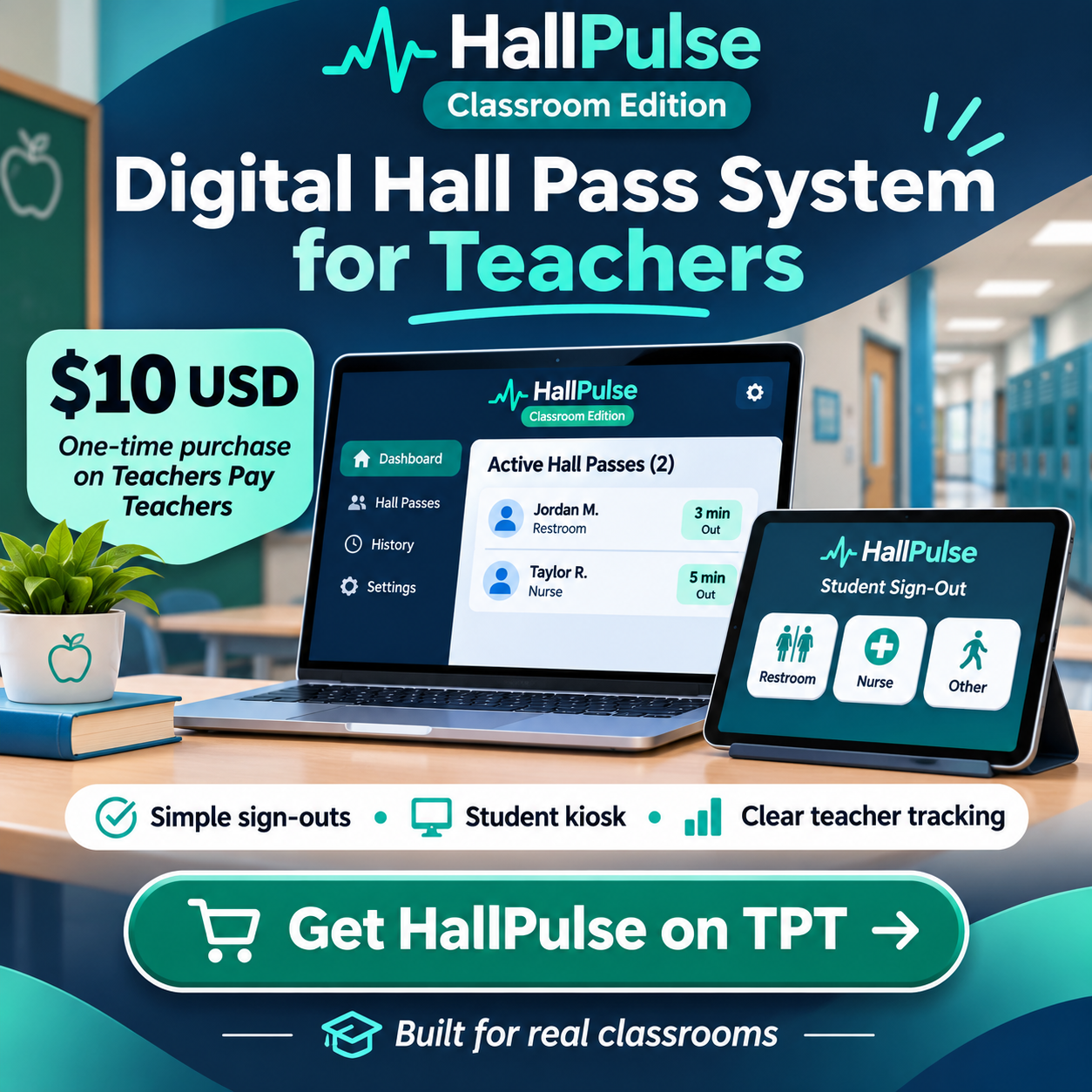
For teachers who want a digital alternative to the clipboard, HallPulse Classroom offers tap-based sign-outs, an optional waiting queue, and teacher-facing departure history. Read how HallPulse works or explore the planned $10 classroom edition.
Frequently asked questions
Should every classroom have the same hall pass rules?
A school-wide baseline is useful for clarity, but classrooms may still need flexibility for grade level, schedules, and individual accommodations.
Do digital hall passes replace supervision?
No. Sign-out records support a routine; they do not monitor a student’s actual location or replace trained staff and school safety procedures.
How much information should a hall pass record?
Collect only what your school needs for a defined purpose, and follow applicable retention and privacy rules.