Teaching Hall Pass Procedures: A First-Week Classroom Routine
A hallway procedure that exists only in a teacher’s syllabus is unlikely to run smoothly when the bell rings. Students need to see the steps, practice them, and know how to ask for help. Teaching the hall pass routine early can reduce repeated explanations throughout the term.
This practical first-week sequence works for either a paper sign-out method or a digital hall pass kiosk. Adjust the procedure to fit school policies and individual student needs.
Before students arrive: simplify the procedure
Write the normal routine as four short actions: request according to class expectations, record the departure, follow the approved route, and record the return. Avoid a second page of exceptions that students must memorize. Instead, explain when students should speak privately to the teacher.
Set up the physical location in advance. A clipboard needs a pen that works and a secure storage place. A digital kiosk needs a charged device, an accessible position, appropriate display settings, and a working return button. Prepare an alternative for students who cannot use the device.
Day one: explain the reason
Tell students why the class uses a pass: the teacher needs to know who is out and confirm that everyone has returned, while students deserve a predictable process. Keep the explanation respectful. The purpose is not to challenge legitimate restroom needs or embarrass students.
Show the location of the pass or kiosk and say which destinations are included. Model a complete departure with a fictional example rather than using a real student’s private information during the demonstration.
Day two: practice sign-out and return
Ask students to describe the steps back to you. Invite a volunteer to demonstrate with test data, then have the class identify what happens when the person returns. This last step is important: an incomplete record may leave someone marked out long after they are back.
If your classroom uses a queue, demonstrate how students see their turn, how a student leaves the queue, and when a teacher can handle an urgent request directly. Make the accommodations process discreet and consistent with school policy.
Day three: introduce the unexpected scenarios
What if the student kiosk is busy? What if a student returns right as the bell rings? What if the network is unavailable? Practice these situations without turning them into a complicated technology lesson.
Create a one-minute paper fallback and identify who will reconcile any records later. Remind students that a technology problem must not block appropriate access to essential facilities or approved support.
Day four: use brief reminders, not a new lecture
Post a small, visible reminder near the sign-out area. Reinforce the routine when needed using the same vocabulary each time. Avoid stopping a lesson to repeat the entire policy if a quiet prompt will suffice.
Notice whether students can complete the process without crossing in front of instruction or distracting others. Adjust the physical setup before blaming students for a confusing workflow.
Day five: gather feedback and make one improvement
Ask two or three questions: Is any step unclear? Is the pass area easy to access? Do you know what to do if a need is urgent or the device is unavailable? Combine student answers with your own observations and make the smallest useful improvement.
Include substitute teachers in the plan. Place an abbreviated procedure in your substitute folder so students are not expected to define the rules on the spot.
A printable-style routine students can remember
Before leaving: Follow the request process, sign out, and use the approved route. When returning: Sign back in promptly and rejoin the lesson. If something doesn’t work: Tell the teacher and use the designated fallback. If you need urgent help: Contact the teacher or appropriate staff right away.
The routine should be taught without public comments about any student’s health needs, personal circumstances, or frequency of departures. A supportive process is more likely to be understood and followed.
Connecting the lesson to digital passes
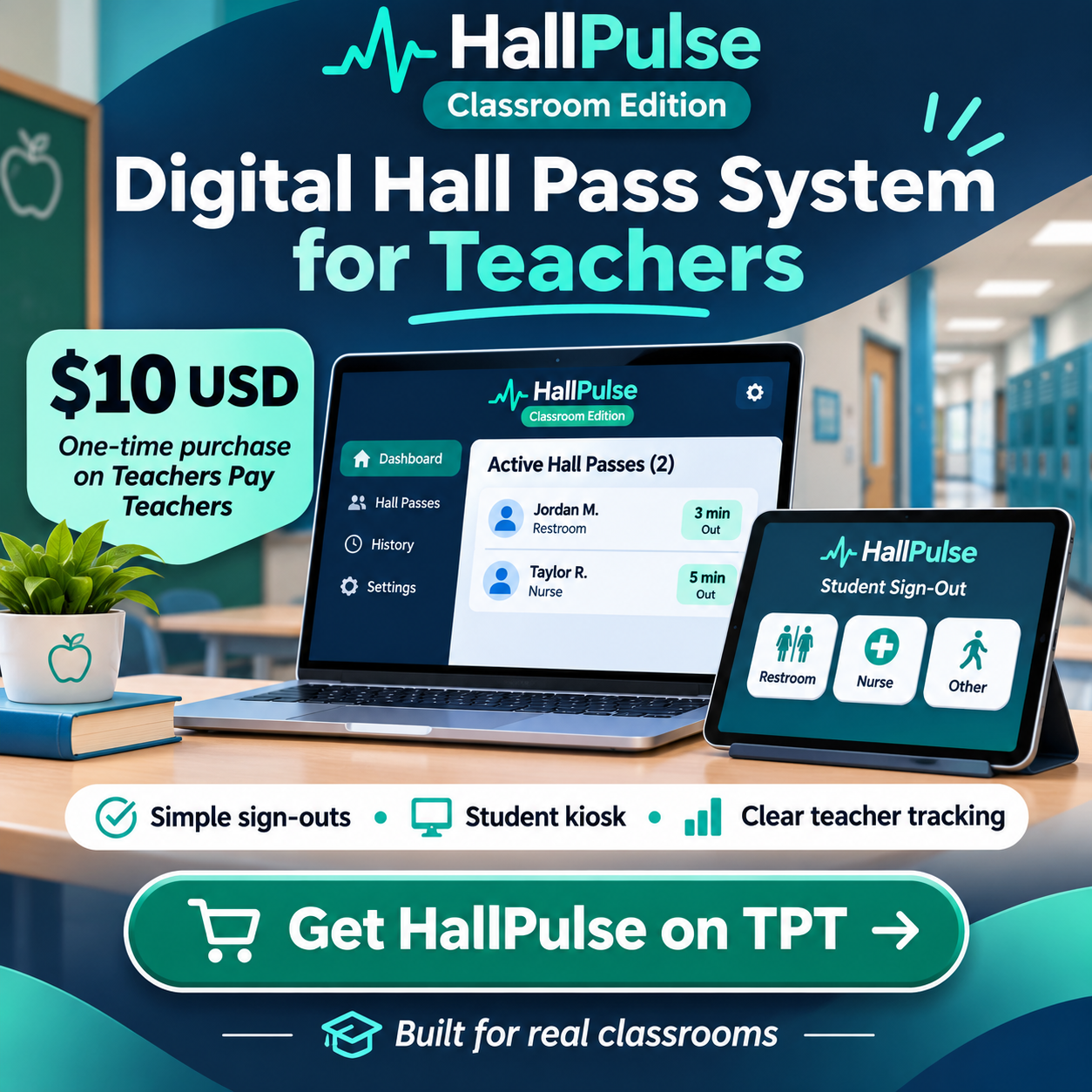
If your class uses technology, a simple kiosk with clear status can make practice easier. HallPulse’s sign-out walkthrough shows the basic flow; the HallPulse Help Center covers setup and pairing. For a broader policy foundation, read our classroom hall pass system guide.
Frequently asked questions
Should I teach the pass routine on the first day?
Yes, if students will need it immediately. A brief initial demonstration followed by practice over the week is often enough.
What if students forget to sign back in?
Verify the return and calmly reteach the closure step. Treat the missing record as something to check, not automatic evidence of wrongdoing.