Restroom Pass Rules That Respect Student Needs and Classroom Routines
Restroom passes can be one of the hardest classroom routines to standardize. Teachers want a predictable process and a clear record of who has left. Students need reasonable access to restrooms without feeling embarrassed, singled out, or trapped in a complicated approval system. A good restroom pass procedure addresses both needs.
The goal is not to eliminate trips. It is to make necessary trips manageable while protecting instructional time and student dignity. The following approach helps teachers design rules that work within their own school policies.
Begin with access, not a numerical limit
A flat limit on restroom visits may look simple, but it can create problems for students with health conditions, disabilities, changing needs, or a temporary illness. Teachers generally should not be put in the position of evaluating medical explanations in front of classmates. Work with your school’s administrators and student-support team to define the appropriate process for urgent and accommodated requests.
Clarify which trips need a normal request and which may require a discreet, immediate response. If a student frequently needs to leave, handle concerns privately and with appropriate staff rather than announcing a pattern to the class.
Teach the ordinary sequence in four steps
First, students follow the classroom’s established request signal, unless an urgent exception applies. Second, they sign out using the approved method, such as a clipboard or digital kiosk. Third, they go to the intended restroom and follow the school’s hallway expectations. Fourth, they sign back in as soon as they return.
Demonstrate that complete sequence, including the return step. If a student signs out electronically, confirm that the screen makes the return action as obvious as departure. Small usability details can prevent a backlog of unclosed passes.
Decide whether to use a one-at-a-time approach
In classrooms with frequent overlapping requests, an optional waiting queue can help students understand whose turn is next. But a queue must have a clear exception process and should not delay urgent access or an accommodation. The teacher needs an easy way to approve a request outside the queue when necessary.
Keep the queue neutral. It should organize ordinary requests rather than publicly display the reasons a particular student needs a restroom. Explain how a student cancels a request and what happens if a class period ends before a turn becomes available.
Keep the record proportionate
Record only the details that help staff manage departures and returns. A general restroom destination, departure time, and return status may be useful. Sensitive medical explanations, public rankings of frequent users, and punitive countdown clocks are not necessary parts of a basic sign-out log.
If you use a shared kiosk, consider where it sits and whether other students can view private information. If you use paper, think about who can read the sheet and where it is stored after class. Both approaches need sensible privacy practices.
Reduce classroom interruptions without discouraging requests
Choose a clear visual signal or kiosk position that does not require a student to interrupt a whole-class explanation. A student can follow the pre-taught routine when the teacher’s approval procedure allows it. When direct permission is required, use a short, respectful exchange rather than a public negotiation.
The best process also handles substitutes and visitors. A two-sentence guide next to the classroom equipment can prevent students from having to explain an informal system to a substitute teacher.
Prepare for problems and unusual situations
If a kiosk loses its connection, use a documented fallback instead of denying access. If a student forgets to sign back in, verify the return before treating it as a behavior issue. If a restroom is closed, staff should know the appropriate alternative and how to communicate it.
A school policy should be reviewed alongside accessibility and student health requirements. For related practical guidance, see the U.S. Department of Education’s school climate resources.
A classroom-friendly reminder
Students should know: request, sign out, go directly to the restroom, and sign back in. Staff should know: respond promptly to urgent or accommodated needs, keep information private, and check incomplete returns. Those expectations make a better starting point than a page of penalties.
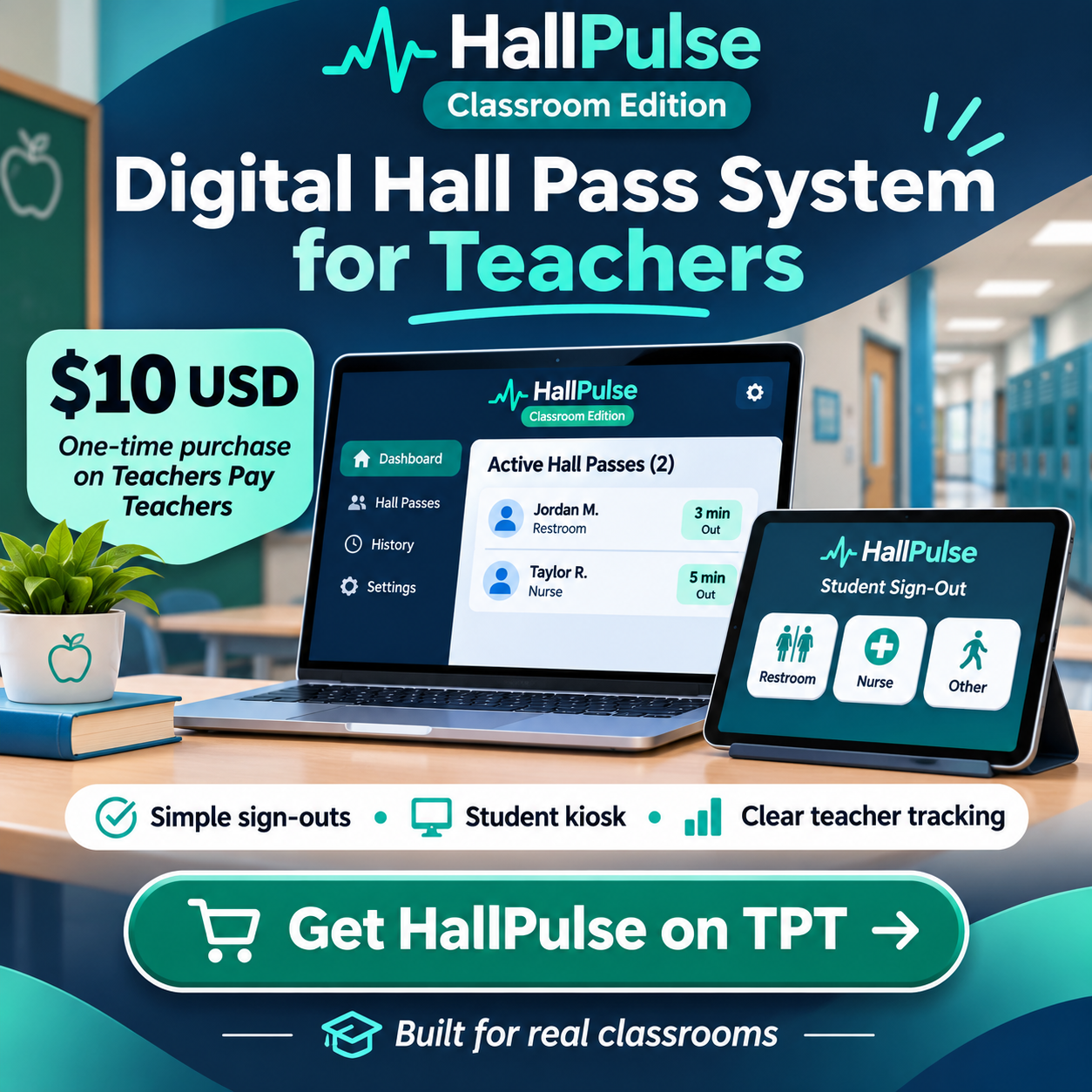
For a digital implementation, HallPulse Classroom offers a student kiosk with return logging and an optional queue. Teachers can also read how to build a classroom hall pass routine before choosing a tool.
Frequently asked questions
Should students always have to wait for the queue?
No. School policy, urgent needs, and documented accommodations should take priority over a routine intended to manage ordinary traffic.
Does a digital restroom pass prove where a student went?
No. It records a declared destination and departure; it does not verify the student’s physical location or replace school supervision.